What Makes an Award-Winning Nurse Call System in 2026
The engineering decisions, real-world performance, and long-term reliability that set a platform apart from the rest of the field.
Healthcare facilities evaluating communication technology in 2026 face a market filled with competing claims and overlapping feature lists. When an award-winning nurse call system earns industry recognition, it signals something more than marketing. It reflects a combination of engineering decisions, real-world performance, and long-term reliability that sets a platform apart from the rest of the field.
Understanding what distinguishes a recognized system from an average one helps administrators ask better questions during the evaluation process. The criteria that matter most have less to do with flashy interfaces and more to do with how a system performs when it matters, how it holds up over time, and how well it supports the people who depend on it every day.
The Foundation: Wireless Independence That Actually Works
The most fundamental quality separating top-performing nurse call systems from the rest is how they communicate. Many systems on the market today depend on existing facility Wi-Fi networks or internet connections to function. That means when the network goes down, when bandwidth gets congested during peak hours, or when IT infrastructure experiences issues, the nurse call system can be affected right along with it.
Award-worthy platforms take a different approach entirely. They operate on dedicated 900MHz spread spectrum wireless networks that function independently of facility IT infrastructure. This is not a minor technical distinction. It means the nurse call system has its own communication backbone that does not compete with other wireless traffic in the building, does not require IT staff to manage or maintain, and does not go offline when the internet does.
The 900MHz frequency range also offers practical advantages for healthcare buildings specifically. Because the FCC allows higher transmit power for 900MHz spread spectrum systems, these platforms provide superior in-building range and up to ten times the open field range of lower-frequency products. Thick walls, steel structures, and multi-story layouts that challenge other wireless technologies are handled reliably by systems purpose-built on this frequency.
Full Device Supervision: Knowing Before Problems Happen
One of the most overlooked qualities in nurse call evaluation is whether a system actually monitors itself. Many facilities assume that if a pendant, pull station, or door sensor stops working, someone will notice. The reality is that in busy care environments, a failed device can go undetected for hours or even days unless the system is designed to catch it.
A truly wireless nurse call system worthy of recognition supervises every connected device continuously. When a transmitter has a low battery, the system alerts staff automatically. When a device becomes inactive or loses communication, a fault notification appears at the console and can be routed to maintenance personnel.
Some competing systems take up to 24 hours to report an inoperative station, and some wired and wireless nurse call systems are not supervised at all. That gap between device failure and staff awareness represents a real safety risk, particularly in memory care or skilled nursing settings where residents depend on these systems for emergency communication.
Scalability Without Starting Over
Healthcare facilities rarely stay the same size for long. Wings get added, buildings expand, and service models evolve. A nurse call system that works well for a 40-bed assisted living community today needs to accommodate 80 beds or a second building five years from now without requiring a complete replacement.
The best systems in the industry support this kind of growth naturally. Wireless repeaters plug into standard electrical outlets and extend coverage to new areas without construction or wiring. Additional transmitters, stations, and devices integrate into the existing network with plug-and-play simplicity. Some platforms support up to 65,000 transmitters on a single system, which means even the largest multi-campus healthcare organizations can operate on one unified platform.
This scalability also applies across care levels. A single system can serve assisted living residents wearing pendants, memory care units with wander management, skilled nursing floors with bedside call stations, and independent living apartments with emergency pull cords.
Flexible Staff Notification That Matches Real Workflows
A nurse call system is only effective if staff actually receive and respond to alerts promptly. The way notifications reach caregivers has evolved significantly, and the best systems reflect that evolution by offering multiple pathways rather than locking facilities into a single method.
Flexible staff notification capabilities in leading systems allow alerts to reach staff through a combination of channels including:
When an alert goes unanswered, programmable escalation paths ensure the call moves to another caregiver, a supervisor, or an entire staff group until someone responds. This escalation continues automatically until the alarm is canceled, eliminating the risk that a call simply gets lost during a busy shift.
Wander Management Integration
Memory care represents one of the most demanding applications for any nurse call platform. Residents living with dementia or Alzheimer's disease may attempt to leave secured areas without understanding the risk, and the consequences of an undetected elopement can be severe.
Award-caliber systems integrate wander management directly into the broader communication platform rather than treating it as a separate, disconnected product. Residents wear small transmitters on comfortable, non-removable wristbands or as pendants. When a resident wearing a transmitter approaches a monitored door, the system can lock the door, sound an alarm, send silent notifications to staff devices, or any combination depending on how the facility configures it.
The integration between wander management and the nurse call platform matters because it creates unified reporting. Facilities can see how often a specific resident attempted to leave, which doors were involved, who responded to the alarm, and how quickly the situation was resolved.
Reporting and Documentation That Save Time
Generated reports can save facilities time and identify important trends. The difference between a basic system and an award-winning one often shows up in the depth and usefulness of its reporting capabilities.
Leading platforms provide statistical call analysis reports that track response times, call volumes by shift, alarm types by frequency, and staff response patterns. These reports support quality improvement initiatives, help administrators identify staffing gaps, and provide documentation during state surveys and regulatory reviews.
Staff presence indication with reports adds another layer of accountability. Facilities can verify that rounds are being completed, that specific areas receive appropriate attention, and that response protocols are being followed consistently. Bed turn scheduling features help ensure residents receive timely repositioning, supporting both resident comfort and compliance with care standards.
Installation That Does Not Disrupt Care
The practical reality of implementing a new nurse call system matters more than most feature comparisons acknowledge. Wired systems require weeks or months of construction, wall penetration, conduit installation, and electrical work. During that time, facilities deal with noise, dust, displaced residents, and restricted access to hallways and rooms.
Wireless systems designed for healthcare eliminate most of that disruption entirely. Repeaters plug into standard outlets. Wall stations mount without running wire through walls. Consoles set up on desks or mount to surfaces. Most installations complete within five to ten days depending on facility size, and normal operations continue throughout the process.
This installation simplicity extends to future changes as well. Moving a call station from one room to another, adding devices to a new wing, or reconfiguring notification paths can all happen without construction, making the system genuinely adaptable to the way healthcare facilities actually operate.
No Recurring Fees or Licensing Costs
The financial model behind a nurse call system reveals a lot about the vendor's priorities. Some companies structure their pricing around ongoing software licenses, annual support contracts, or per-device subscription fees. These recurring costs accumulate over the life of the system and can significantly increase total ownership expense.
The approach that earns industry recognition takes a different philosophy. Facilities purchase their system outright with no ongoing fees for software licenses or technical support. The system belongs to the facility, and quality equipment should not require recurring payments to remain operational. Visible costs at the time of purchase include the hardware, installation, and training needed to get the system running.
Free programming support further reduces ownership burden. Vendors that offer to customize the system at no additional charge, handle configuration changes remotely, and provide technical assistance through a dedicated support line demonstrate a commitment to the facility's long-term success rather than treating every service interaction as a revenue opportunity.
Safety Certification and Compliance
Healthcare life safety systems must meet specific regulatory standards, and the certifications a system holds communicate how seriously the manufacturer takes those requirements. ETL listing to UL 1069 represents one of the most important benchmarks for nurse call equipment used in skilled nursing and acute care settings. This certification is required in many states and validates that the system meets nationally recognized safety standards for performance, reliability, and construction.
Sales engineers familiar with varying state regulations can help facilities ensure their system meets or exceeds all applicable standards before installation begins. This expertise proves particularly valuable during survey preparation and actual regulatory reviews, where documentation gaps can create problems even for well-designed systems.
American Manufacturing and Long-Term Viability
Where a system is designed and manufactured matters more than many buyers realize. Companies that control their entire product line from engineering through production offer distinct advantages in quality control, parts availability, and long-term support. When the same team that designed the product also builds it and supports it, issues get resolved faster and compatibility is guaranteed.
Products manufactured in the USA under controlled conditions meet strict quality and environmental standards. More importantly, domestic manufacturing means the company is not dependent on overseas supply chains that can be disrupted by trade disputes, shipping delays, or geopolitical instability.
Backward compatibility represents another indicator of long-term viability. Systems built for the future ensure new developments remain compatible with existing equipment, so facilities can adopt new capabilities without replacing what already works. That philosophy protects initial investments and keeps systems current without forced obsolescence.
Why Systems Technologies
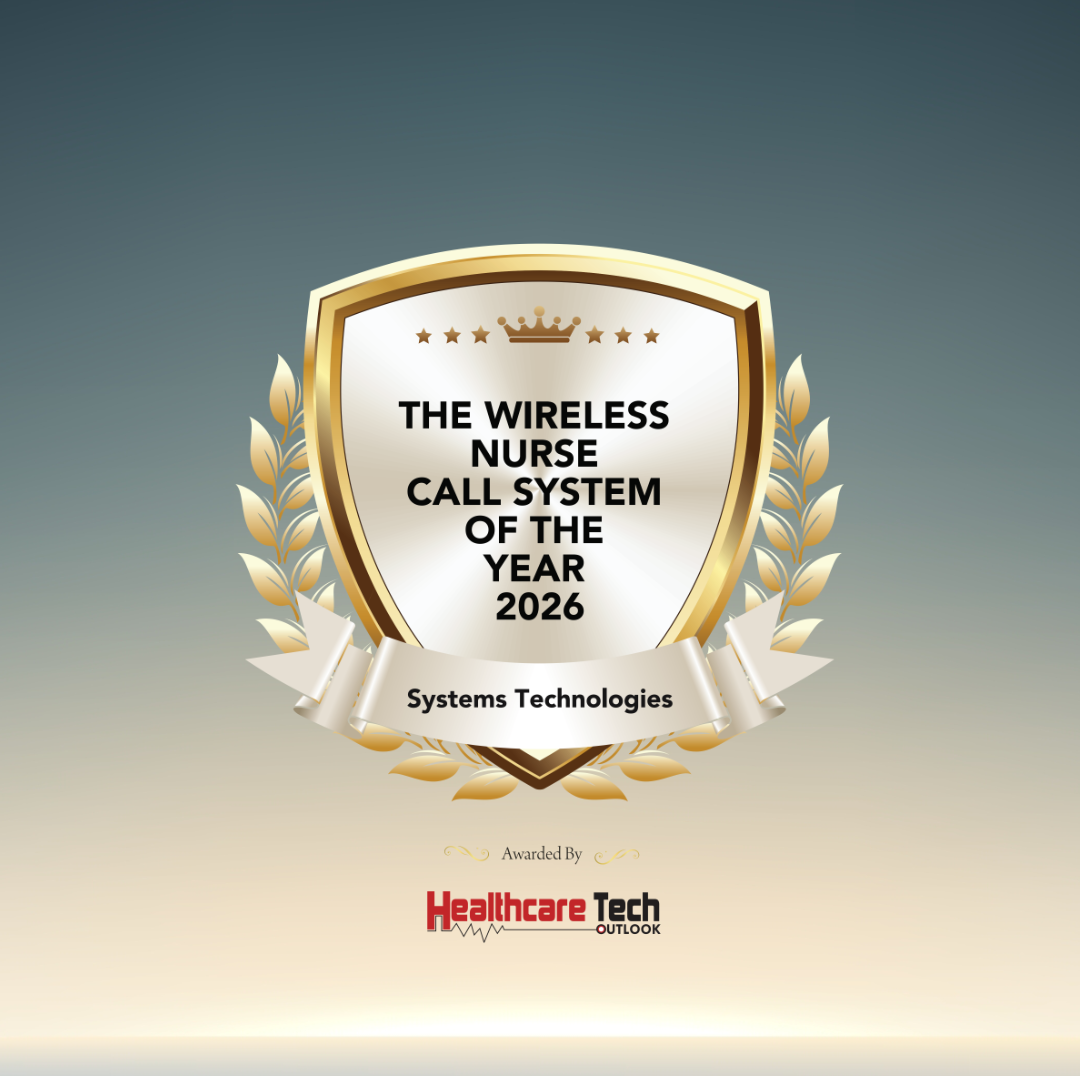
Systems Technologies has earned recognition as the Wireless Nurse Call System of the Year 2026 by Healthcare Tech Outlook, reflecting 30 years of focused innovation in healthcare communication. Since pioneering wireless nurse call systems in 1995, they have maintained a singular commitment to designing, manufacturing, and supporting dependable safety platforms from their headquarters in Hayden, Idaho. With over 10,000 installations across the country, their track record demonstrates consistent performance across every care setting from small adult family homes to large multi-campus healthcare organizations.
As manufacturers controlling complete product development and support, Systems Technologies ensures every component meets rigorous healthcare standards for reliability and performance. Their American-made equipment is available ETL Listed to UL 1069 and UL 2560 safety standards. The company provides lifetime technical support with no recurring licensing fees or support subscriptions, and an emergency telephone assistance line is available 24/7 for existing customers.
Systems Technologies believes quality equipment should not burden facilities with recurring fees. Their sales engineers assist with everything from state compliance to system design, ensuring successful implementation.
Find the Right Nurse Call System for Your Facility
Our experienced sales engineers will help you evaluate your facility's specific needs, walk you through available options, and design a system that fits your environment and budget.
No obligation. We'll reach out within one business day.
Frequently Asked Questions
Ready to See the Award-Winning Difference?
Discover how the Wireless Nurse Call System of the Year can support your facility's safety and communication needs for decades to come.