The essential capabilities that separate dependable, long-lasting platforms from systems that look good on paper but fall short when facilities need them most.
Choosing a nurse call system is one of the most consequential technology decisions a healthcare facility will make. The system you select will influence how quickly staff respond to emergencies, how efficiently your teams communicate, and how well your facility meets regulatory requirements for years or even decades after installation.
The challenge is that most vendors present long catalogs of technical specifications without explaining why certain features matter more than others in real care environments. This guide breaks down the top features that separate dependable, long-lasting nurse call platforms from systems that look good on paper but fall short when facilities need them most.
The single most important feature to evaluate is how the system communicates. This is the foundation that everything else depends on, and it is where the biggest differences between platforms reveal themselves.
Some nurse call systems rely on facility Wi-Fi or internet connections to transmit alerts. That means the nurse call system shares bandwidth with every other wireless device in the building, depends on routers and access points that can fail or become congested, and stops working if the internet goes down. For a system that carries life-safety alerts, that dependency creates unnecessary risk.
The most reliable platforms operate on dedicated 900MHz spread spectrum wireless networks that function completely independently of facility IT infrastructure. These systems do not require Wi-Fi, do not need internet connectivity, and do not require IT staff to manage or maintain them. The 900MHz frequency range was specifically chosen for healthcare buildings because the FCC allows higher transmit power at this frequency, providing superior in-building range and up to ten times the open field range of lower-frequency products.
When evaluating any nurse call system, the first question to ask is whether it operates independently or depends on your existing network. In healthcare, independence is not a luxury feature. It is a safety requirement.
A nurse call system can only protect residents if every device in the network is actually working. In busy care environments, a failed pendant, a dead battery in a pull station, or an inactive door sensor can go undetected for hours unless the system itself catches the problem and alerts staff.
Full system supervision means the platform continuously monitors every connected device, including transmitters, repeaters, wall stations, door controllers, and pendants. When any component experiences a low battery condition or becomes inactive, the system generates a fault notification at the console. That alert can be automatically routed to maintenance personnel so the issue gets resolved before it becomes a safety gap.
Some competing systems take up to 24 hours to report an inoperative station, and some wired and wireless nurse call systems are not supervised at all. The difference between a supervised and unsupervised system could mean the difference between catching a failed device during a routine maintenance check and discovering it only after a resident's emergency call goes unanswered.
How alerts reach your caregivers determines how quickly they can respond. Facilities that rely on a single notification method create bottlenecks that slow response times. The best systems provide multiple simultaneous notification channels so staff receive alerts wherever they are and through whatever device they prefer.
Look for platforms that support flexible staff notification through a combination of delivery methods:
Equally important is what happens when a call goes unanswered. Programmable alarm escalation should automatically move alerts through a defined path, from the assigned caregiver to a backup, then to a supervisor or group, continuing until someone responds and cancels the alarm.
Not every call carries the same urgency. A resident requesting help with a television remote is fundamentally different from a code blue emergency or an elopement alert in a memory care unit. Systems that treat all alerts the same contribute to alarm fatigue, where staff become desensitized to notifications because they cannot distinguish critical emergencies from routine requests.
Effective nurse call platforms offer visual and audible alarm prioritization with multiple distinct priority levels. The ability to create custom device names and assign specific priority classifications to different alarm types means staff can immediately recognize the nature and urgency of each call.
This customization extends to notification routing as well. Facilities should be able to configure which staff members or groups receive specific alarm types and customize those assignments by shift.
For facilities serving residents with cognitive impairment, integrated wander management is not optional. It is essential safety infrastructure. Memory care units or any other environment where residents may attempt to leave secured areas without understanding the risk need systems that detect and respond to unauthorized exit attempts instantly.
The best wander management platforms equip residents with small transmitters worn on comfortable, non-removable wristbands or as pendants. Door controllers installed at monitored exits detect these transmitters and respond based on facility configuration. Depending on the setup, the system can lock the door automatically, sound a local alarm, send silent notifications to staff devices through pager, mobile app, email, or text, or any combination of these responses.
Look specifically for systems where wander management integrates directly with the broader nurse call platform rather than operating as a separate, disconnected product. Integrated platforms provide unified reporting that shows how often specific residents attempted to exit, which doors were involved, who responded, and how quickly the situation was resolved.
Healthcare facilities rarely stay the same size for long. A system that fits a 50-bed assisted living community today needs to accommodate expansion to additional buildings, new service lines, or increased resident capacity without requiring a complete system replacement.
Wireless platforms offer inherent scalability advantages over wired systems. Adding coverage to a new wing or building means installing additional wireless repeaters that plug into standard electrical outlets and mounting new stations without running wire through walls. Some platforms support up to 65,000 transmitters on a single system, meaning even the largest multi-campus healthcare organizations can operate on one unified platform.
Scalability also means the system can serve multiple care levels simultaneously. A single platform should handle long-term care residents with bedside call stations, assisted living residents wearing wireless pendants, memory care units with wander management, and independent living apartments with emergency pull stations.
Generated reports can save facilities time and identify important trends. This capability separates basic alerting systems from comprehensive communication platforms that support operational improvement.
Look for systems that provide statistical call analysis reports tracking response times, call volumes, alarm types, and staff performance. The ability to access reports remotely and schedule automatic generation means administrators spend less time compiling data and more time acting on insights.
Additional reporting features that add significant value include staff presence indication with reports for verifying that rounds are being completed, bed turn scheduling to support resident repositioning compliance, and active or passive resident check-in status tracking.
Wired nurse call systems require weeks or months of construction including wall penetration, conduit runs, electrical backbox installation, and extensive labor. During that time, facilities deal with noise, dust, restricted access, and displaced residents.
Wireless systems designed for healthcare eliminate most of that disruption entirely. Repeaters plug into standard electrical outlets approximately every 150 feet. Wall stations mount to surfaces without running wire through walls. Systems ship pre-programmed to facility specifications. Most installations finish within five to ten days depending on facility size, and normal operations continue throughout the process.
This installation simplicity extends to future changes as well. Moving a call station from one room to another, adding devices for new residents, or reconfiguring notification paths can all happen without construction.
Nurse call systems used in healthcare must meet specific safety standards. ETL listing to UL 1069 is one of the most important benchmarks for nurse call equipment used in skilled nursing and acute care environments. This certification validates that the system meets nationally recognized standards for performance, reliability, and construction quality, and it is required by many states.
Beyond certification, evaluate whether the manufacturer offers assistance with state-specific regulatory requirements. Experienced vendors with knowledgeable sales engineers can help facilities ensure their system meets or exceeds all applicable standards before installation begins.
Battery backup is another compliance consideration. An uninterruptible power supply (UPS) should be available for battery backup, and repeaters should include internal batteries providing extended operation during power outages.
The financial model behind a nurse call system reveals a great deal about the vendor's priorities and the true long-term cost of ownership. Some vendors structure pricing around ongoing software licenses, annual support contracts, or per-device subscription fees. These recurring costs accumulate significantly over the 10, 15, or 20-year lifespan of a nurse call system.
The most facility-friendly approach is one where you purchase the system outright and own it completely. No ongoing fees for software licenses or technical support. Visible costs at the time of purchase include the hardware, installation, and training needed to get the system running. After that, ongoing investment is limited to replacement batteries and any additional devices you choose to add.
Free technical support and remote programming should be included for the life of the system. Vendors that charge for every configuration change or troubleshooting call are creating a financial disincentive for facilities to optimize their systems.
A nurse call system is a long-term investment that should serve your facility for many years. The vendor's approach to backward compatibility tells you whether they view each sale as a one-time transaction or a lasting partnership.
Look for manufacturers that ensure new developments remain compatible with existing equipment. Facilities that purchased systems years ago should be able to add new technology and services without replacing what already works.
Manufacturers who design and build their own products offer distinct advantages in long-term support. They control parts availability, ensure component compatibility, and provide direct technical expertise from the same team that engineered the system.
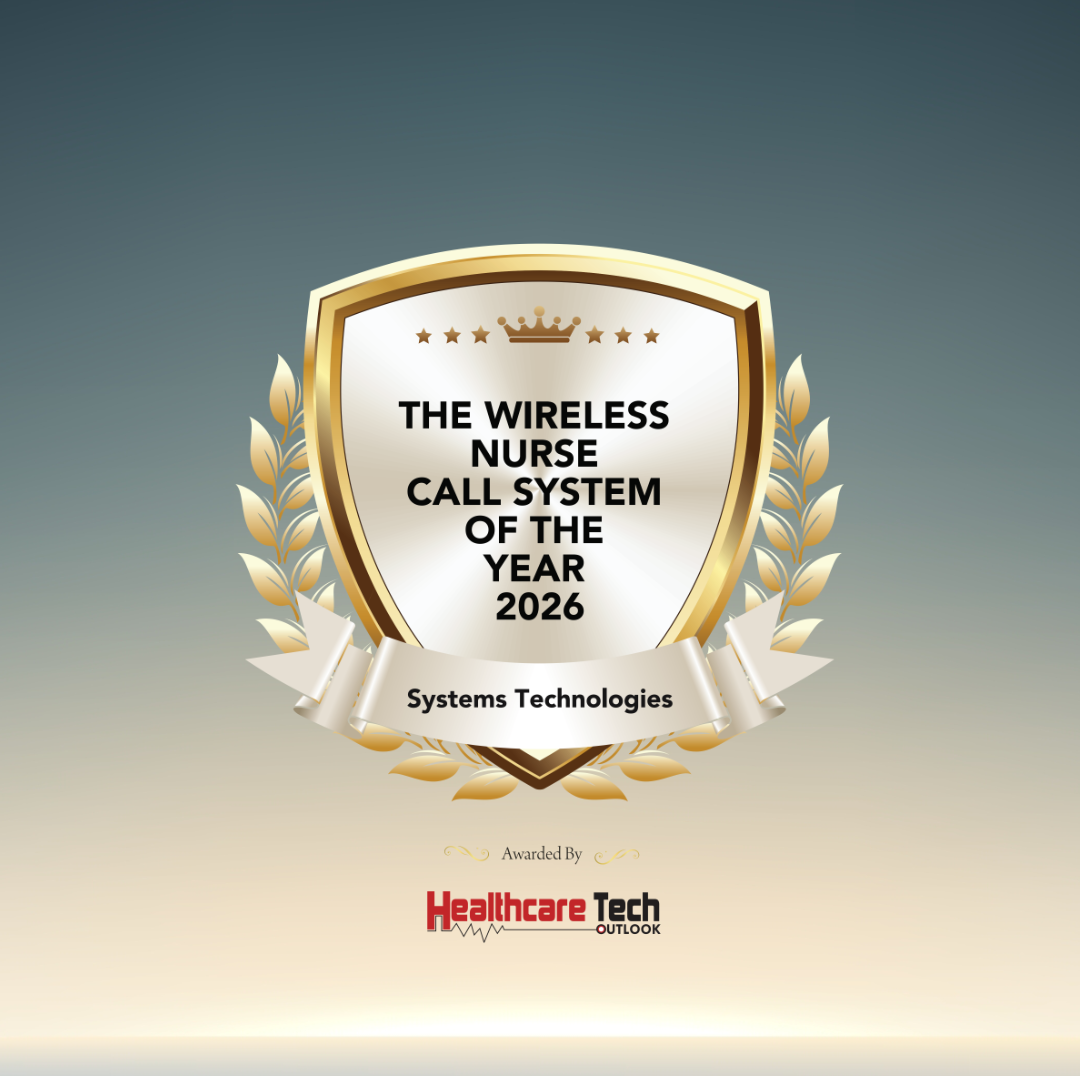
Systems Technologies has been designing, manufacturing, and supporting wireless nurse call systems since 1995, earning recognition as the Wireless Nurse Call System of the Year 2026 by Healthcare Tech Outlook. With over 10,000 installations across every care setting from small adult family homes to large multi-campus healthcare organizations, their track record demonstrates consistent performance backed by a support model built on facility ownership.
Their American-made equipment is available ETL Listed to UL 1069 and UL 2560 safety standards, operates on a dedicated 900MHz network independent of facility IT infrastructure, and ships with no recurring licensing fees or support subscriptions. Every system includes lifetime technical support, free remote programming, and 24/7 emergency telephone assistance for existing customers.
Systems Technologies believes quality equipment should not burden facilities with recurring fees. Their experienced sales engineers assist with everything from state compliance to system design, ensuring successful implementation tailored to your facility's specific needs.
Our experienced sales engineers will help you evaluate your facility's specific needs, walk you through available options, and design a system that fits your environment and budget.
No obligation. We'll reach out within one business day.
Discover how the Wireless Nurse Call System of the Year checks every box on this list and can support your facility for decades.
